
HRV — Your Daily Readiness Score ExplainedUpdated a month ago
What it is
Heart Rate Variability (HRV) measures the tiny variations in time between your heartbeats. Despite what the name suggests, a higher HRV is a good thing — it means your nervous system is flexible and your body is recovered and ready to perform. A lower HRV can signal stress, fatigue, or the need for more rest.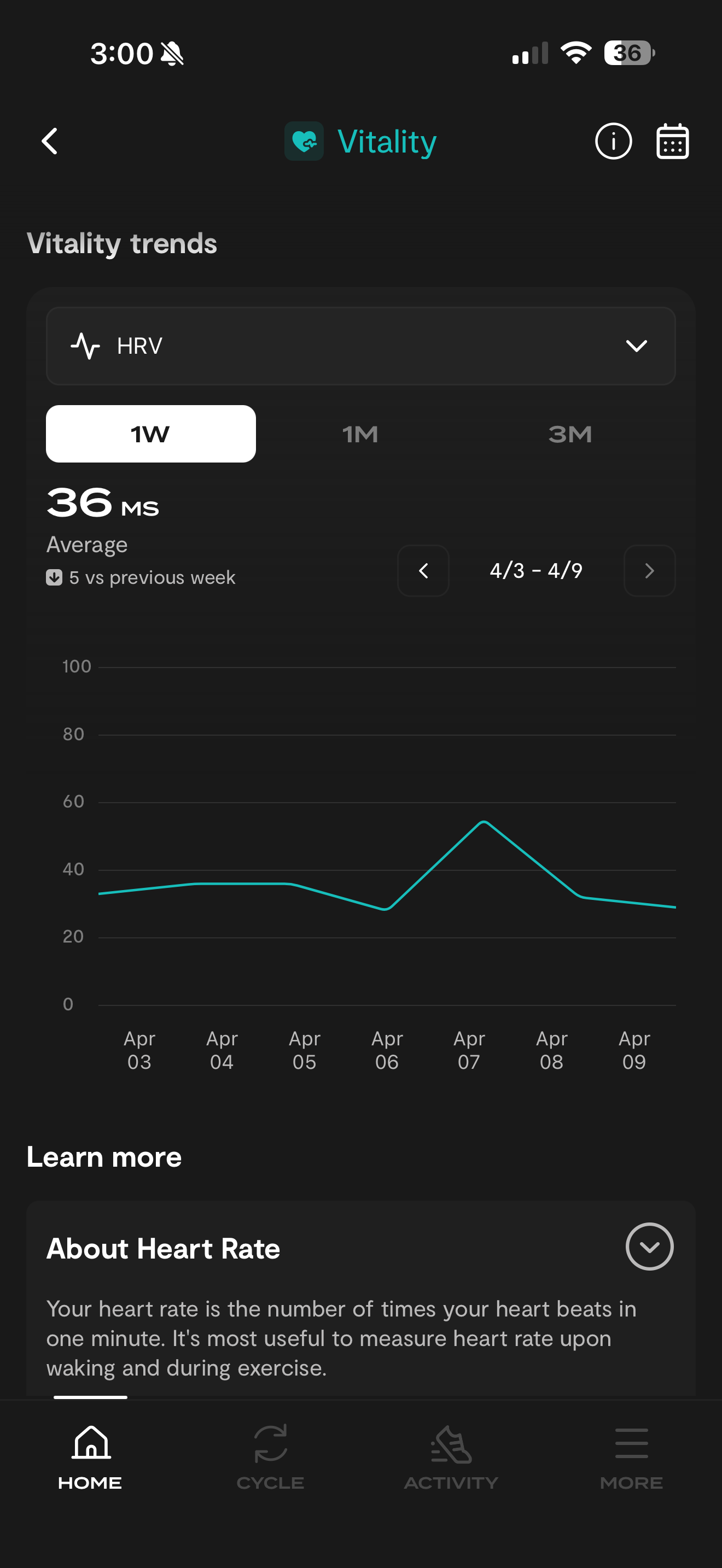
How a QALO smart ring tracks it
HRV is captured using the ring's PPG (photoplethysmography) optical sensor on your finger. The accelerometer filters out motion artifacts, and the thermistor accounts for skin temperature variation — giving you a clean, accurate HRV reading. A normal range for healthy adults is 19–75 ms, though your personal baseline matters more than any absolute number.
In the app, your QALO smart ring shows your HRV as a tailored score — calibrated to your individual baseline, not a population average. This means your score is meaningful to you specifically.
How to use it
Your HRV is your personal readiness signal. Use it to make smarter daily decisions:
- High HRV: Your body is primed. Good day to train hard, take on a challenge, or tackle high-focus work.
- Low HRV: Your body is asking for recovery. Good day for lighter activity, extra sleep, or stress management.
Pro tips for improving HRV
- Consistent sleep timing pays off faster than almost anything else
- Heavy training, long runs, or high-stress days will naturally lower your HRV — that's expected and normal
- Track trends over 2–4 weeks rather than reacting to any single reading
- Alcohol, even in moderate amounts, reliably suppresses HRV overnight