
Sleep Tracking — What QRNT Measures While You RestUpdated 4 months ago
Total Sleep
Total sleep is the amount of time you spend actually asleep — not just in bed. For most adults, 7.5–8.5 hours is the sweet spot for cognitive function, emotional regulation, and physical recovery.
The QRNT ring tracks this automatically every night. No buttons, no logging. You train hard, work hard, and live hard — short sleep nights add up fast and show up in your HRV, readiness, and next-day output. Your total sleep number keeps you honest about whether you're recovering enough to keep pushing.
Pro tip: Track your trend over weeks, not single nights. Pair it with your rest-day data to decide when to push hard and when to pull back.
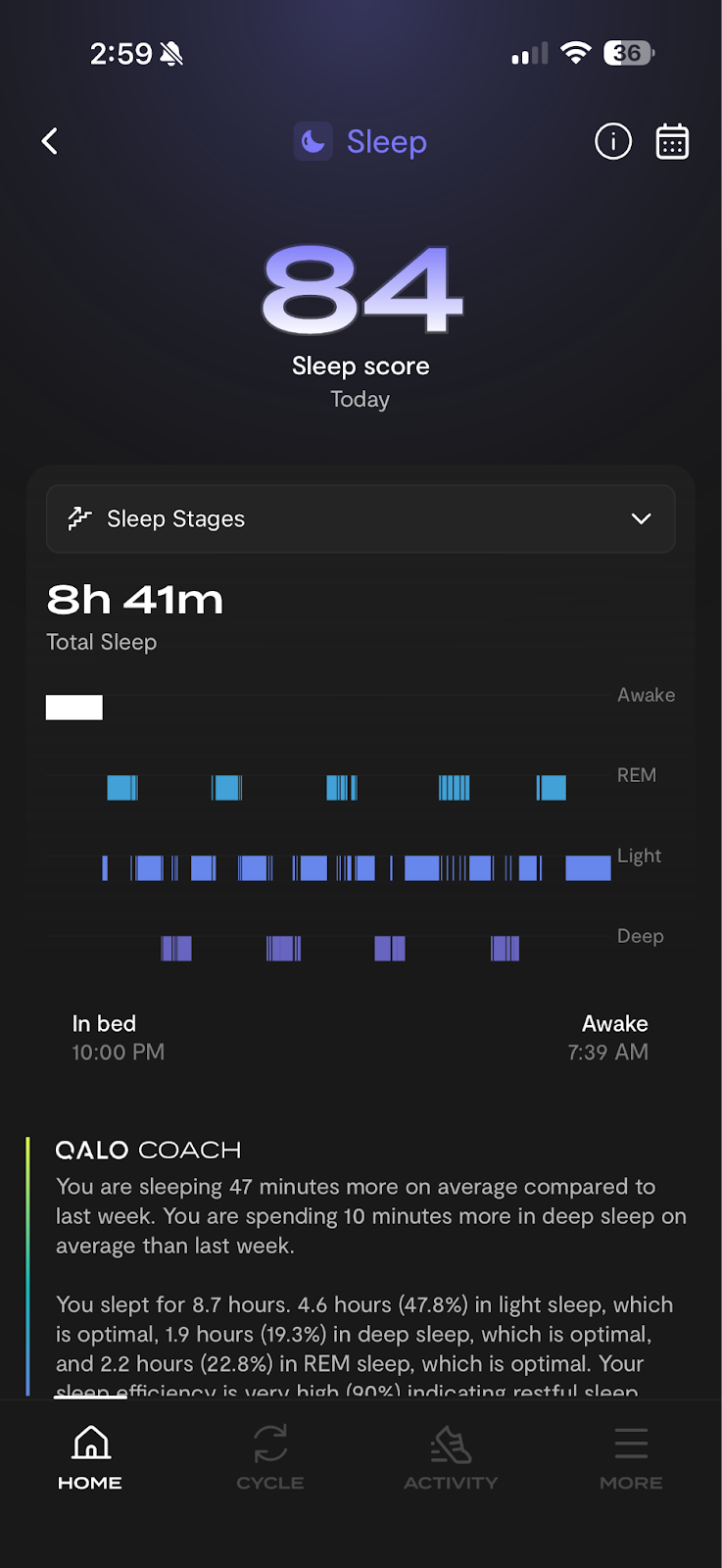
Sleep Stages
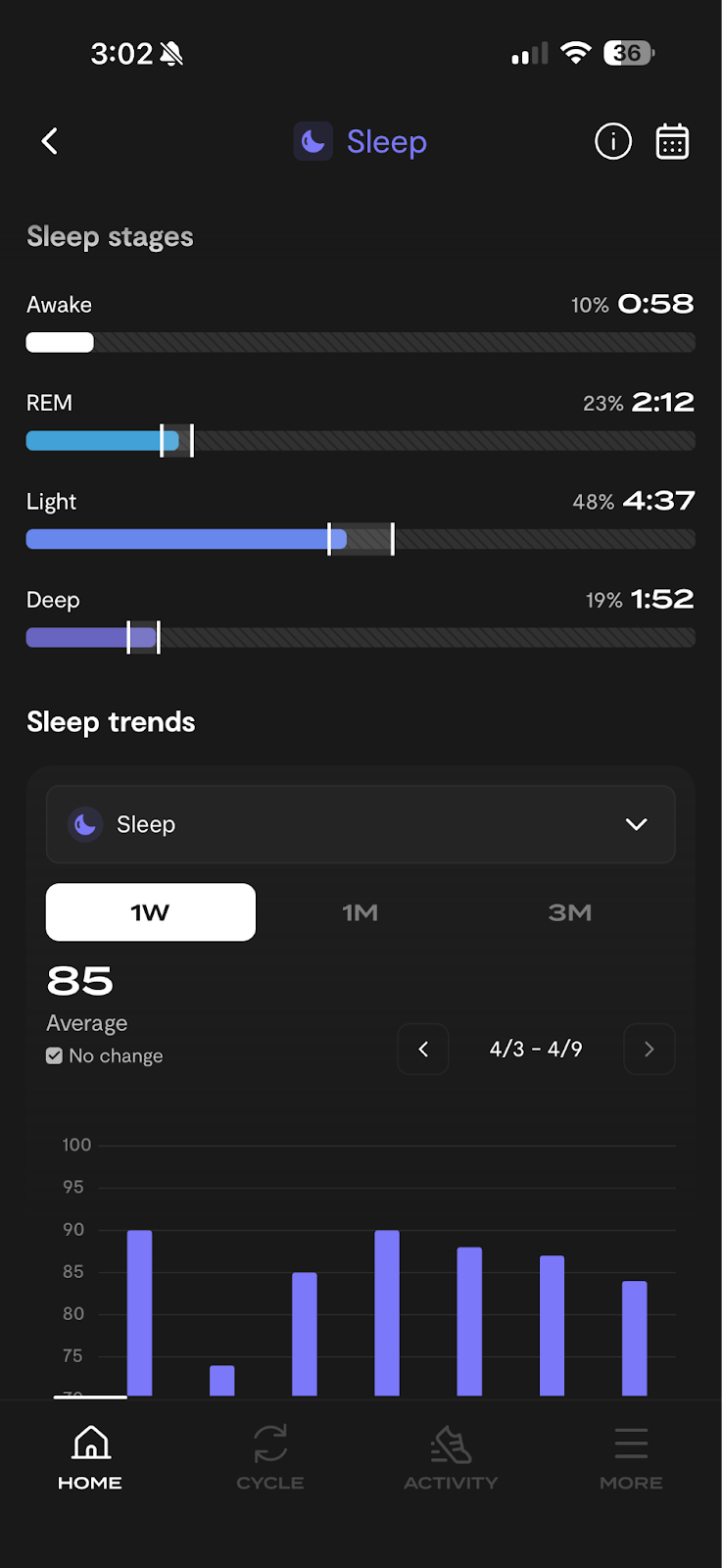
Each night, your body cycles through four sleep stages: light, deep, REM, and brief awake periods. QRNT tracks your time in each stage and shows you the nightly breakdown in the app.
Deep sleep rebuilds your body. REM sharpens your mind. When your stages are balanced, you wake up ready to perform instead of dragging through the day.
Pro tip: Consistent deep sleep usually lines up with better HRV and lower stress scores the next day — watch for that pattern in your data.
Sleep Efficiency & Sleep Latency
Sleep efficiency is the percentage of your time in bed you spend actually asleep. A normal range is 85%+; above 90% is ideal. Sleep latency is how long it takes you to fall asleep after getting into bed — under 8 minutes is the target.
These two numbers reveal how well you're actually using your time in bed. If you're in bed for 8 hours but only sleeping 6, you're leaving recovery on the table. Fast sleep onset usually means your body is primed to recover; long latency can signal lingering stress, too much screen time, or that you haven't wound down enough before bed.
Pro tip: Pair efficiency and latency with your total sleep — that's where the real performance edge is.