
Stress Tracking — How QRNT Reads Your Nervous SystemUpdated 4 months ago
What it is
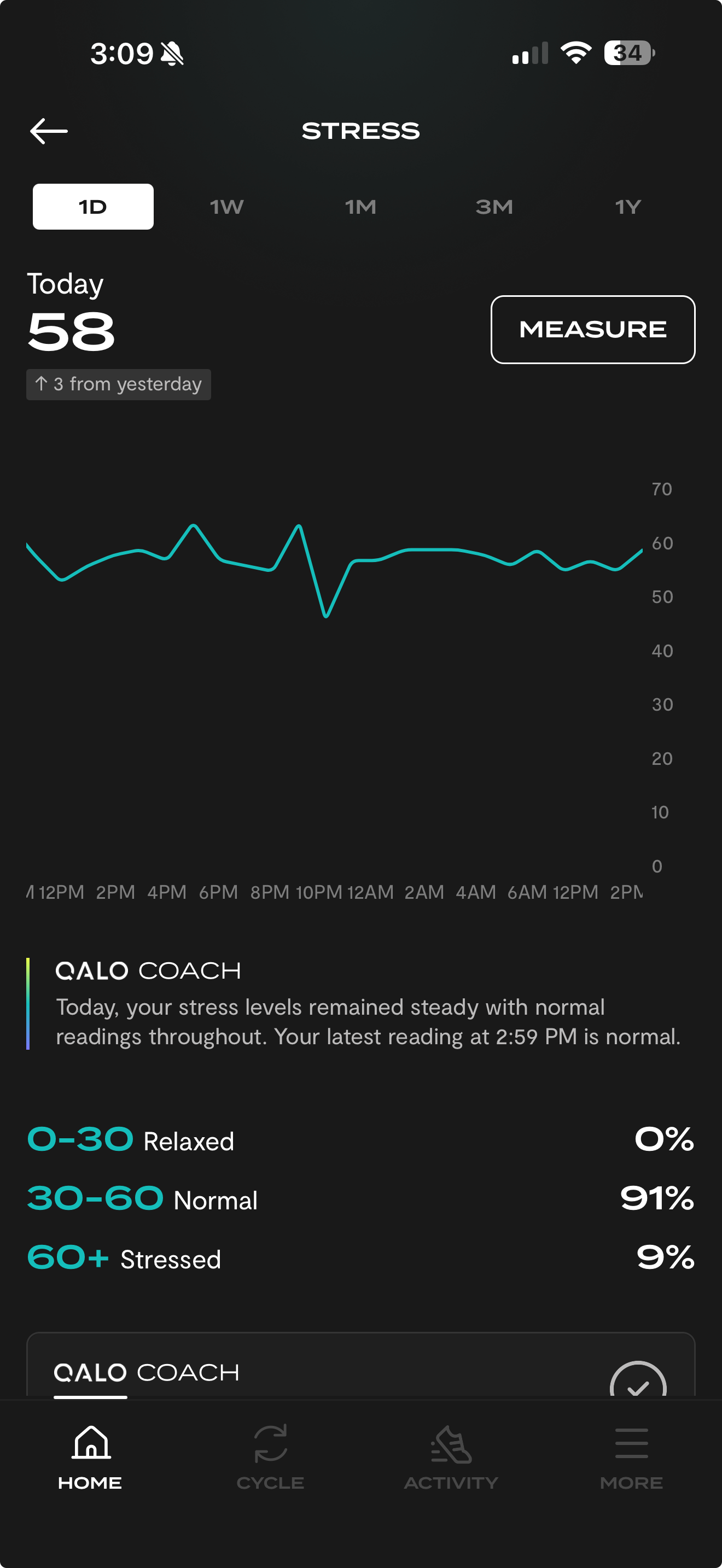
QRNT's Stress score uses HRV, heart rate, and skin temperature together to show how your nervous system is handling the demands of your day. It runs continuously in the background and surfaces patterns in the app — so you can see how your body actually responds to work, workouts, sleep, and recovery, not just how you feel in the moment.
How to read your score
A lower stress score means your nervous system is calm and regulated. A higher score means your body is under load — whether from physical exertion, poor sleep, emotional pressure, or illness. Both are normal. What matters is the pattern over time.
What affects it
- Poor or insufficient sleep
- High-intensity training without adequate recovery
- Caffeine and alcohol intake
- Emotional or work-related pressure
- Illness or immune response
How to use it
Pair your Stress score with your HRV and Sleep data for a fuller picture. A high stress score alongside low HRV and poor sleep efficiency is a strong signal to prioritize recovery that day. A high stress score after a hard workout but with good sleep the night before is simply your body working as intended.